

Why Long-Assignment Contractors Need a Different Housing Checklist
Furnished housing for government contractors is not the same decision as booking a weekend vacation rental or a standard apartment lease. Long assignments often involve a specific reporting location, a defined start date, a contract-funded lodging budget, and a work schedule that may change with mission needs. If you are supporting a federal agency, defense contractor, installation project, training pipeline, shipyard, depot, or technology integration effort, the right rental can make the assignment easier to manage. The wrong one can create billing problems, commute fatigue, equipment security concerns, and expensive move-out surprises.
The key difference is duration. A two-night guest can tolerate a small kitchen, street parking, or slow Wi-Fi. A contractor staying 30, 60, 90, or 180 days needs a property that functions like a temporary home and a reliable work base. That means clear lease terms, predictable monthly pricing, furnished bedrooms, full laundry access, utilities that are truly included or clearly capped, and enough documentation to satisfy the company, project manager, or travel administrator handling reimbursement.
TDY Hero helps connect military travelers, government-affiliated guests, and property owners in markets where temporary furnished housing is a practical alternative to hotels. For contractors, the platform can be especially useful because many listings are designed around longer stays, base-adjacent work, and practical lodging needs rather than vacation-style amenities. Before booking, however, you should ask targeted questions that match your assignment length, payment process, and day-to-day routine.
For example, furnished options near Eglin and Hurlburt include TDY Lodging Near Eglin AFB & Hurlburt Field – 2-Bed Home by the Beach - DTS Approved and Hurlburt/Eglin TDY home minutes to Navarre and Pensacola Beach. 3bd 2 bath. All new furniture!.

Ask How the Lease Handles Assignment Length, Extensions, and Early Departure
The first question should be simple: does the property owner understand the actual assignment length and the possibility of change? Government contract work can shift because a task order is extended, a funding period changes, equipment is delayed, a training schedule moves, or a clearance-dependent start date is adjusted. A rental that only works for exact, fixed vacation dates may not be the best fit for a long assignment. You need to know whether the owner offers month-to-month terms, 30-day minimums, rolling extensions, or a fixed lease with renewal options.
Ask what happens if you need to extend. Some furnished rentals are booked back-to-back, which means there may be no option to stay past the original checkout date. That can force a mid-assignment move, which creates downtime, duplicate cleaning fees, and added coordination with your employer. If an extension is possible, confirm whether the rate stays the same, whether taxes or fees change after a certain number of nights, and how much notice the owner requires. A clear extension process is one of the most important features of furnished housing for government contractors.
Early departure matters just as much. Contractor assignments may end before expected if work is completed, funding is paused, or the supported office changes priorities. Ask whether the lease includes an early termination clause, a minimum notice period, or a penalty. If your company will not cover unused lodging after a project ends, you need to understand that risk before signing. A fair arrangement usually balances the owner’s need for predictable occupancy with your need for flexibility tied to the contract schedule.
Confirm What Documentation Is Available for Company Billing
Contractor lodging is often paid differently than active-duty TDY lodging. Some guests pay personally and seek reimbursement through an employer. Others use a corporate card, direct bill arrangement, project-funded travel system, or company housing coordinator. Before booking, ask the owner what documentation can be provided. At a minimum, you may need a lease or lodging agreement, a paid invoice, an itemized receipt, property address, owner or management company name, dates of occupancy, nightly or monthly rate, taxes, fees, deposits, and payment confirmation.
If your employer requires a specific invoice format, confirm that before money changes hands. Some companies need the guest’s legal name, project code, purchase order number, or business entity listed on the receipt. Others require lodging charges to be separated from refundable deposits, cleaning fees, parking fees, pet fees, or utilities. A furnished rental may be a strong housing option, but it still needs to produce paperwork that your company can process without repeated corrections.
You should also ask whether the property owner can provide a W-9, business license information, or proof of insurance if your employer requires vendor verification. Not every private host can or will provide corporate onboarding documents. TDY Hero listings can help you start the conversation with owners who are already oriented toward longer furnished stays, but you still need to verify the exact billing requirements from your employer. The best time to discover a documentation gap is before booking, not after the first expense report is rejected.
If you are coordinating arrivals for multiple travelers, a clear TDY rental welcome binder can also reduce back-and-forth before check-in.

Review Total Cost Beyond the Advertised Monthly Rate
A monthly furnished rental rate is only useful if you understand the full cost. Ask whether the listed price includes utilities, Wi-Fi, trash service, lawn care, pest control, parking, laundry access, furnishings, linens, kitchenware, and routine maintenance. Many long-assignment guests prefer one all-inclusive price because it is easier to budget and submit for reimbursement. Others may be comfortable with an itemized structure, especially if the employer pays actual expenses. Either approach can work, but vague pricing creates problems.
Pay close attention to cleaning fees, deposits, and utility caps. A property may advertise utilities included, but the lease may limit electricity, gas, or water usage above a certain dollar amount. This is common in extreme climates where summer air conditioning or winter heating can be expensive. If you are staying near a desert base, coastal installation, mountain region, or humid Gulf Coast market, utility use may vary significantly by season. Ask whether the cap is realistic for normal living and whether you will receive copies of bills if overages are charged.
Taxes can also affect the total cost. Some jurisdictions treat stays under a certain length as short-term lodging subject to hotel or occupancy taxes, while longer stays may be treated differently. Ask the owner how taxes are handled for your specific length of stay. If your employer reimburses taxes separately, the receipt should show them clearly. If the rental becomes tax-exempt after a certain number of nights, confirm whether the rate changes automatically or whether you need to request an adjustment.
Evaluate Commute Reliability, Not Just Distance on a Map
For long assignments, the daily commute can affect productivity, sleep, fuel costs, and overall quality of life. A rental that appears close on a map may still be frustrating if the route crosses a congested gate area, bridge, tunnel, construction zone, mountain pass, or weather-prone roadway. Ask the owner what the typical commute is during your actual work hours, not just at midday. If your assignment involves early shift work, rotating schedules, or secure-site entry, a few miles can make a meaningful difference.
Contractors supporting installations or federal facilities should ask about gate access patterns, parking expectations, and alternate routes. Some neighborhoods are excellent for daytime office workers but poor for early-morning arrivals because of bottlenecks near the main gate. Others may offer a slightly longer mileage distance but a more reliable commute. When comparing furnished housing for government contractors, commute predictability should be weighted alongside price and amenities.
Local climate can also change the housing decision. In the Gulf Coast and Florida Panhandle, heavy rain, tropical weather, and evacuation routes may matter. In New Mexico, Arizona, Nevada, or inland California, heat, sun exposure, and garage parking can affect comfort and vehicle protection. In mountain or northern markets, winter road conditions and snow removal should be part of the conversation. TDY Hero can help you identify rentals near military and government-heavy markets, but you should still ask hyperlocal commute questions before committing to a long stay.
For colder assignments, our winter-ready furnished rentals guide near Minot AFB shows why climate questions should be part of the housing search from the start.
Ask Whether the Property Supports Work-From-Home and Secure Equipment Needs
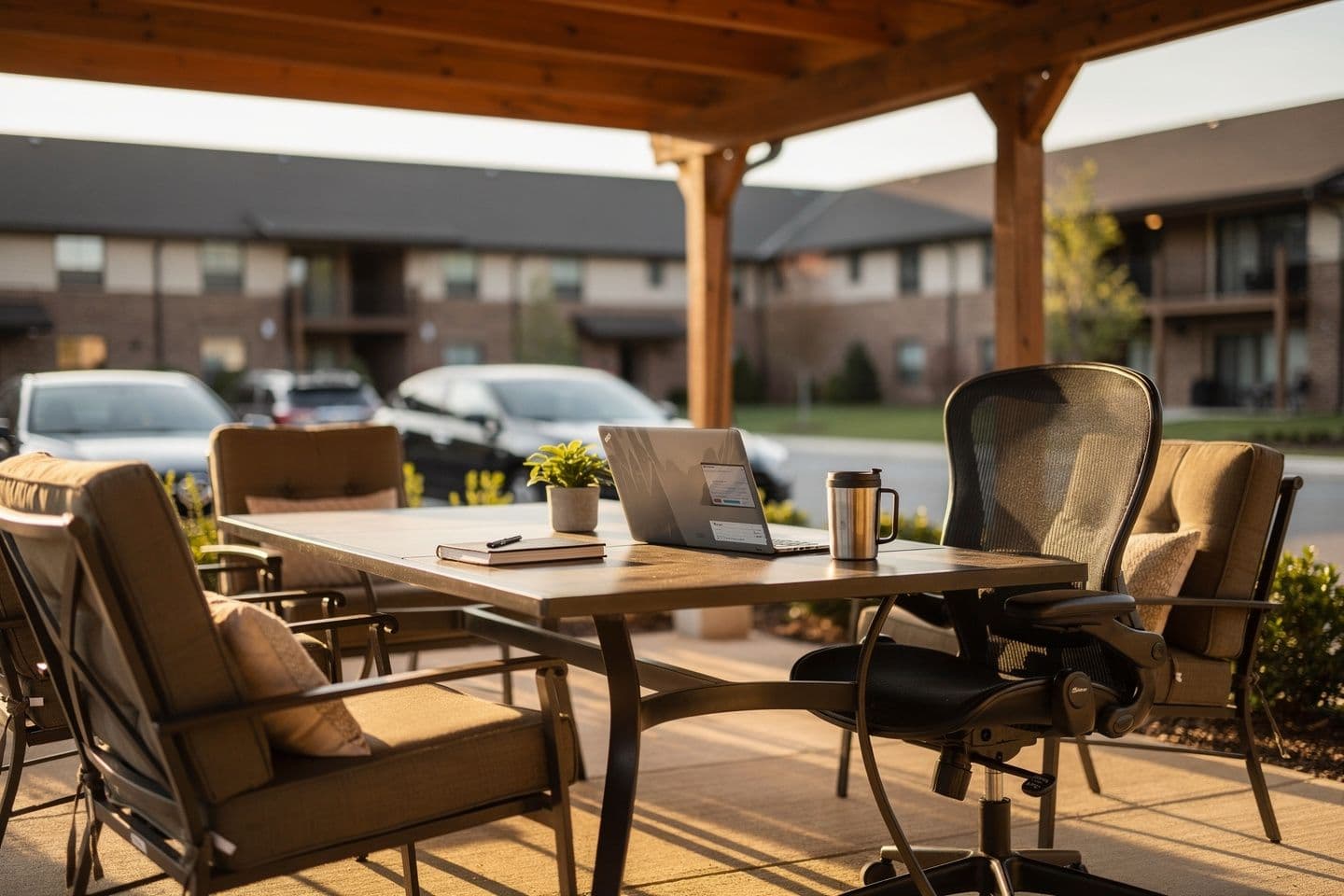
Many contractors do not simply sleep at the rental. They review documents, attend remote meetings, complete timekeeping, coordinate with corporate teams, or prepare deliverables after returning from the worksite. Ask whether the property has a real workstation, reliable high-speed internet, adequate lighting, and enough outlets. A small dining table may be fine for a short visit, but a long assignment is easier when there is a dedicated desk, supportive chair, and quiet space for calls.
Wi-Fi deserves specific questions. Ask about the internet provider, approximate speeds, router location, and whether service is shared with another unit. If video calls, engineering files, training platforms, or remote desktop access are part of your job, weak internet can become a major problem. Also ask whether there is a backup plan if service goes down. The owner may not guarantee uninterrupted internet, but a responsive host should know how outages are handled and who to contact.
Security is another consideration. Contractors may travel with laptops, monitors, tools, test equipment, or sensitive but unclassified work materials. Ask about exterior lighting, door locks, parking visibility, garage access, package delivery, and whether other guests or roommates share the property. If your assignment requires controlled storage, confirm what is allowed under your employer’s policies. A private furnished home, townhouse, or apartment may be a better fit than shared housing if equipment security and quiet work time are priorities.
Contractors who need a separate workspace may want to compare layouts like TDY Hurlburt Eglin - Downtown FWB Condo 2bed/2bath/office when reviewing long-stay options.

Verify Furnishings, Housewares, Laundry, and Daily-Living Details
A furnished rental should be ready for normal daily life, but the definition of furnished varies widely. Ask for a detailed inventory or recent photos of the bedrooms, kitchen, living area, bathrooms, laundry area, and storage spaces. At a minimum, most long-assignment contractors need a comfortable bed, dresser or closet space, sofa or seating, dining space, cookware, dishes, utensils, coffee maker, microwave, full-size or functional refrigerator, towels, linens, vacuum, broom, and basic cleaning supplies. If the stay is several months, small gaps become daily annoyances.
Laundry is especially important. Ask whether the washer and dryer are in the unit, shared, coin-operated, or off-site. A contractor working long shifts may not have time to visit a laundromat or coordinate shared laundry windows. If uniforms, business casual clothing, field gear, or safety apparel must be washed frequently, in-unit laundry is more than a convenience. It can be a deciding factor between two otherwise similar properties.
Kitchen functionality also matters because long assignments often make hotel dining expensive and unhealthy. Ask whether the kitchen supports real cooking, not just reheating. A furnished rental with a proper cookware set, baking sheet, cutting board, knives, food storage containers, and basic appliances can help you control meal costs over several months. TDY Hero hosts who serve extended-stay guests often understand these details, but you should still ask direct questions if meal prep is part of your assignment routine.
Clarify Rules for Guests, Pets, Parking, and Shared Spaces
Long assignments often involve normal life needs that short hotel stays do not. A spouse may visit for a weekend, a child may come during a school break, or a coworker may stop by to carpool. Ask about guest rules before booking. Some properties limit overnight visitors, require owner approval, or charge extra for additional occupants. Clear rules protect both you and the property owner. They also prevent misunderstandings if your plans change midway through the stay.
Pet rules should be just as specific. If you are traveling with a dog or cat, ask about breed restrictions, weight limits, pet rent, deposits, yard access, flooring, nearby walking areas, and cleanup expectations. If the property is in a hot climate, ask whether the yard has shade or whether pavement temperatures are a concern. If the property is in a coastal or rural area, ask about fleas, ticks, wildlife, and fencing. Pet-friendly does not always mean pet-practical for a multi-month stay.
Parking can be a hidden issue for contractors. Ask whether parking is assigned, garage, driveway, covered, street, gated, or permit-based. If you have a company vehicle, rental car, trailer, tools, or a larger truck, confirm size restrictions and HOA rules. Shared spaces should also be discussed. In a shared house or multi-unit property, ask who else uses the kitchen, laundry, yard, entrance, and storage areas. Privacy expectations should be clear before arrival.
If yard space, parking, and family visits matter, a home-style option such as Welcome to the Beautiful SunDown Home in Navarre! All new furniture! may fit the assignment better than a smaller unit.

Check Maintenance Response, Safety Features, and Move-In Readiness
A long stay increases the chance that something will need attention during occupancy. Ask how maintenance requests are handled, who responds after hours, and how quickly urgent issues are addressed. Air conditioning failure in Arizona, heat problems in a northern winter, plumbing backups, internet outages, appliance failures, and lock problems can disrupt both work and rest. A good owner should have a practical plan, not just a vague promise to look into issues when convenient.
Move-in readiness is also important. Ask when the property was last deep-cleaned, whether linens are freshly laundered, whether the HVAC filter has been changed, and whether smoke detectors, carbon monoxide detectors, door locks, and exterior lights are functional. If the rental has a smart lock, confirm how access codes are issued and changed between guests. If it uses physical keys, ask how key pickup and return work, especially if you arrive late after travel delays.
Safety does not require a luxury property, but it does require attention to basics. Look for well-lit entrances, secure windows, functional locks, clear parking, and reasonable neighborhood conditions. You can also ask whether the owner provides emergency contacts, trash pickup instructions, utility outage information, and local rules in a welcome guide. TDY Hero encourages practical, guest-ready listings, and contractors should prioritize properties where the owner communicates clearly before the stay begins.
Final Thoughts: Book the Rental That Matches the Assignment, Not Just the Rate
Furnished housing for government contractors should be evaluated through the lens of the assignment. Price matters, but it is only one part of the decision. The better question is whether the rental supports your work schedule, commute, reimbursement process, equipment needs, personal routine, and possible timeline changes. A lower monthly rate may not be a bargain if it comes with unreliable internet, poor documentation, inflexible extension terms, or a long daily commute.
Before booking, you should ask about lease flexibility, early departure, invoice details, payment methods, utility inclusions, taxes, commute reliability, work-from-home setup, furnishings, laundry, parking, pets, guest rules, maintenance, and safety. These questions may feel detailed, but they are exactly what separates a smooth long assignment from a frustrating one. A professional owner will understand why the details matter and should be able to answer clearly.
TDY Hero can help you find furnished rentals built for longer temporary stays in military and government-connected markets. Whether you are supporting a defense program, construction project, training mission, technical rollout, or agency contract, the right housing should make the assignment more manageable from the first day to the final checkout. Ask the right questions upfront, keep documentation organized, and choose the property that fits the full assignment—not just the search result with the most attractive headline.